
There’s a foundational reality that marketers need to remember when engaged in brand management:
You don’t own your brand.
Your customers do.
A brand is not a logo, a tagline, or a beautifully designed website. It’s the sum of perceptions, experiences, beliefs, and stories that live in the minds of the people you serve. And yet, one of the most common mistakes we see across industries is this: brands make big decisions without ever truly listening to customers.
That’s where a strong Voice of Customer (VoC) program changes everything.
Voice of Customer Isn’t a Research Project. It’s a Discipline.
Too often, VoC is treated as a one-time initiative—something you do before a rebrand or a major strategic shift. But the brands that consistently outperform their competitors treat customer insight as an ongoing discipline, not a checkbox.
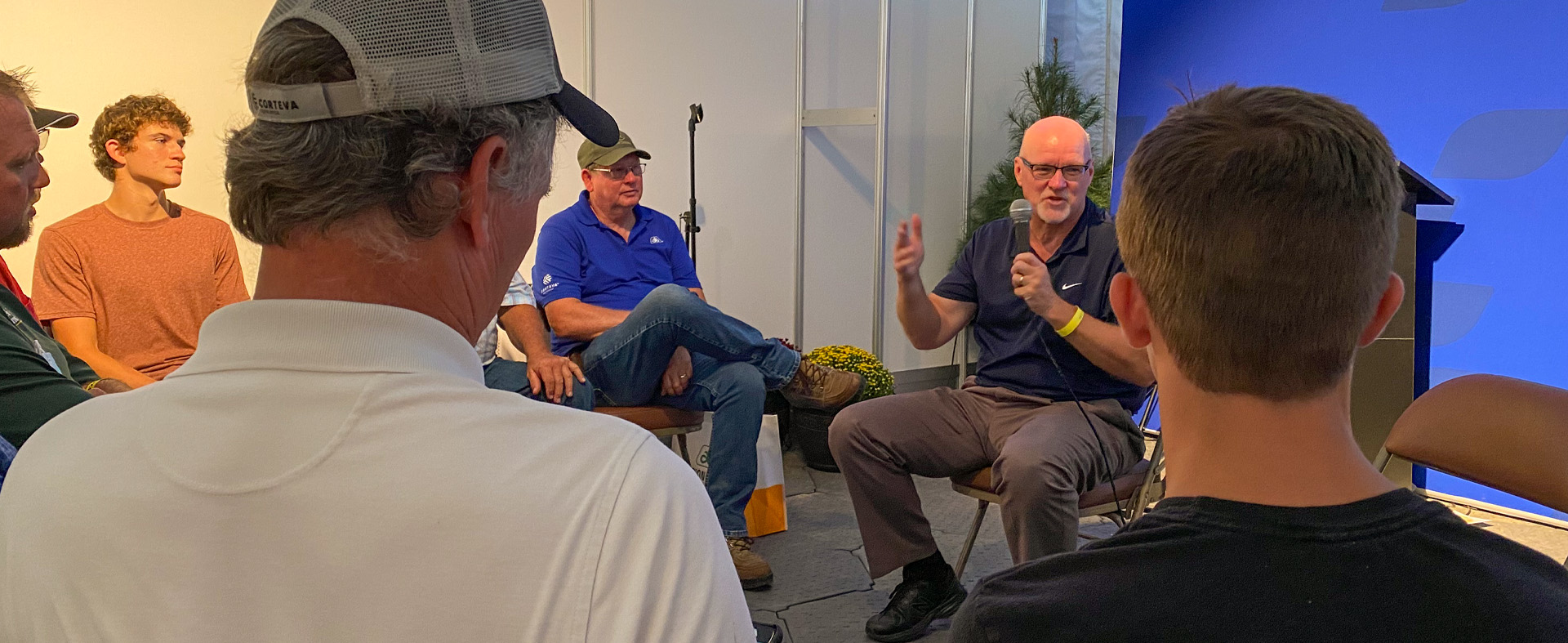
At DKY, we’ve seen firsthand how transformational this can be when done well. Across industries, from outdoor recreation to agribusiness to B2B manufacturing, our most successful brand work has one thing in common: it starts with real conversations with real customers.
Not surveys alone. Not assumptions. Conversations.
What We Learn When We Actually Talk to Customers
In recent years, DKY has led qualitative-driven brand studies for clients including many clients across a variety of industries. Each engagement was different in scope and structure, but all were anchored in deep, human insight. We listened directly to customers, partners, and stakeholders, and enhanced those findings with quantitative data.

Here’s a snapshot of what VoC work can unlock:
1. Reframing Brand Through Experience
In our work with an RV manufacturer, customer conversations revealed that buyers weren’t just choosing RVs, they were choosing a lifestyle, a sense of freedom, and trust in a brand that would support them long after purchase. That insight helped inform brand positioning, messaging, and experience decisions that went far beyond product features. The value wasn’t just marketing clarity, it was strategic clarity.
2. Complexity Demands Customer-Centered Clarity
A large agribusiness company operates at massive global scale, across deeply complex markets. VoC research helped surface how customers perceived their role not just as a supplier, but as a partner navigating volatility, sustainability pressures, and global supply chains. Those insights influenced brand narrative, thought leadership, and how the company showed up across communications, culture, and innovation priorities.
3. Trust Is Built in the Moments That Matter
Our VoC work with a company serving the electric utility industry revealed something powerful: customers defined “partnership” not by pricing or contracts, but by responsiveness, follow-through, and how the company showed up during high-stakes moments like storms, outages, and emergencies. That understanding sharpened our client’s brand positioning and reinforced where to invest in customer experience, communication, and relationship-building.
4. Insight as a Catalyst for Alignment and Growth
In our work with a contract manufacturing company, the VoC interviews uncovered how customers truly viewed reliability, innovation, and scale, and where perceptions diverged from internal assumptions. Those insights became a foundation not just for brand positioning, but for decisions around culture, recruiting, service development, and long-term growth strategy.
In every case, the most valuable insights weren’t found in dashboards. They were found in stories, emotions, and expectations customers hadn’t been asked about before.
Why VoC Creates Competitive Advantage
Brands that invest in ongoing Voice of Customer programs gain advantages that are hard to replicate:
- Sharper value propositions grounded in real customer language
- Stronger differentiation based on what truly matters, not what’s easiest to say
- More effective product and service development aligned to real needs
- Deeper loyalty and trust, because customers feel heard
- Better internal alignment, from marketing and sales to operations and leadership
Perhaps most importantly, VoC reduces risk. It replaces assumption with evidence and opinion with insight.
The Missed Opportunity for Today’s Marketers
In a world of endless dashboards, AI tools, and performance metrics, it’s easy to forget the most powerful insight source available: a conversation.
Voice of Customer doesn’t compete with analytics, it completes it.
The brands that win today are not the ones shouting the loudest. They’re the ones leaning in to listen the most, learning the fastest, and responding with authenticity and clarity.
If you want to build a brand that rings true—one that earns trust, loyalty, and long-term relevance—start by listening. And don’t stop.
Because if you’re not listening to your customers, someone else will.